
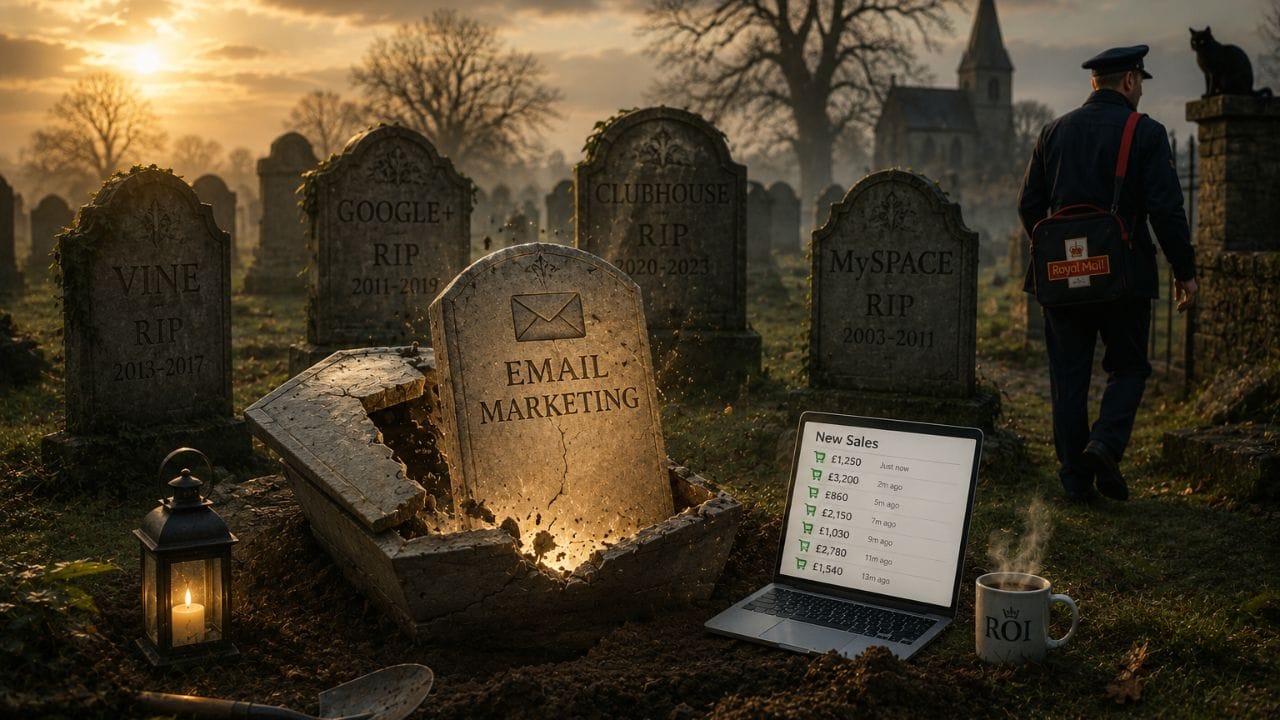

Email marketing strategy is declared dead roughly once a year. Every year, it quietly outperforms every platform making the declaration. In 2026, while brands burn budget fighting for feed space on channels they do not own, email remains the single most direct, most controllable and most commercially effective channel available. This blog makes the case for why that matters and what you should do about it.
Why Email Keeps Getting Overlooked
There is no viral moment in email. No algorithm to crack, no trend cycle to ride, no platform update to panic about. The industry conversation gravitates relentlessly towards shiny and new. Email is neither. It is just effective and that is precisely why it gets ignored.
The same echo chamber that pushes brands towards TikTok and tells them to invest in whatever platform launched last quarter is the one declaring email obsolete. The data says something very different. According to Litmus’s 2024 State of Email report, email generates an average return of £36 for every £1 spent. That figure does not fluctuate with an algorithm update.
The real problem is that email lacks prestige. There is no metric equivalent to views or follower count to screenshot and share in a board meeting. As a result, it gets deprioritised by marketing teams chasing the channels that look impressive rather than the ones that convert.
What a Strong Email Marketing Strategy Actually Delivers
The commercial reality most brands are ignoring
No algorithm decides who sees your message. No pay-to-play reach threshold sits between you and your audience. When someone joins your list, they have already said yes to hearing from you. That is a fundamentally different relationship to a social media follower who may never see your posts organically again.
A well-managed email list is one of the most valuable assets a brand can own. It is a direct commercial line to people who have already demonstrated interest. The DMA’s 2025 Consumer Email Tracker consistently shows email as the preferred channel for receiving brand communications among UK consumers, outperforming social media, push notifications and SMS.
Email is also one of the last channels where genuine human voice and personalisation still cuts through meaningfully. AI-generated email blasts are as detectable as they are damaging. Recipients know when they are being processed rather than addressed and they disengage accordingly. This is why authentic, well-written communication remains the most important differentiator in the inbox.
The owned media argument
Platform risk is real and brands have felt it. Algorithm collapses, reach implosions, account suspensions and overnight policy changes have cost businesses audiences they spent years and significant budget building. Every follower on a rented platform is at the mercy of decisions made without you in the room.
Your email list is yours. No platform can remove it, restrict its reach or charge you more to access it next quarter. As AI search continues to reshape how brands get discovered online, as explored in our series on generative engine optimisation and what GEO actually is, owning a direct line to your audience becomes even more strategically important. Discovery brings people in. Email keeps them.
What Good Email Marketing Looks Like in 2026
It is not a monthly newsletter nobody reads
An effective email marketing strategy in 2026 is segmented, properly written and consistently delivered. It treats recipients like intelligent adults rather than names in a database. Personalisation extends well beyond inserting a first name. It means relevant content, appropriate timing and a clear commercial purpose behind every send.
Frequency matters. Too many emails and you train your audience to ignore or unsubscribe. Too few and you become forgettable. The right cadence varies by audience and sector, but the underlying principle is consistent: every email should earn its place in the inbox.
Subject lines remain disproportionately important. Campaign Monitor’s benchmarking data shows that a strong subject line can increase open rates by over 50 per cent on the same underlying content. The email is irrelevant if it does not get opened.
The UGC and EGC connection
Some of the most effective email content is not written by the brand at all. Customer stories, employee voices and real testimonials consistently outperform polished corporate copy in the inbox. The same principles that make UGC marketing a powerful growth driver on social apply directly to email content strategy.
When a real customer describes how a product changed their routine, that carries more weight than any brand-authored claim. Similarly, content that originates from within the organisation, written in a human voice rather than a brand voice, builds credibility in a way that templated sends cannot replicate. The power of UGC in building brand trust translates directly to email, where trust determines whether the message gets read or deleted.
How to Build an Email List Worth Having
The list is only as good as the reason people joined it and the reason they stay. Vanity metrics around list size are meaningless if the audience is disengaged or unqualified. A smaller, highly relevant list will consistently outperform a large one built through gimmicks or purchased data.
Lead magnets with genuine value, gated content relevant to your audience, event sign-ups and well-structured post-purchase sequences are among the most reliable list-building methods. The key word in each case is genuine. If the lead magnet is thin or the content behind the gate disappoints, the subscriber arrives already disillusioned.
Segmentation from the point of sign-up, rather than retroactively, gives every campaign a better foundation. Knowing why someone joined and what they are interested in allows you to send the right message rather than the same message to everyone. This is where email marketing strategy separates itself from email broadcasting.
For brands thinking about content marketing more broadly, our guide on how to get started with content marketing covers the strategic foundations that apply across channels. Email and content are most powerful when they work together rather than in isolation.
Frequently Asked Questions
What is an email marketing strategy?
An email marketing strategy is a planned approach to using email as a commercial channel. It covers list building, audience segmentation, content planning, send frequency, personalisation and performance measurement. A strategy treats email as an asset rather than an afterthought.
What is the ROI of email marketing compared to other channels?
Email consistently delivers higher ROI than any major social media platform. Industry benchmarks place the average return at approximately £36 for every £1 spent, though well-optimised programmes frequently exceed this. The absence of algorithmic reach restrictions is the primary structural advantage.
How often should you send marketing emails?
Frequency depends on your audience, sector and the quality of content you can produce. Most consumer brands find a weekly or fortnightly cadence sustainable and effective. The more important rule is consistency: an audience that expects to hear from you regularly will engage more reliably than one that receives sporadic sends.
How do you grow an email list organically?
Organic list growth comes from offering genuine value in exchange for an address. Lead magnets, gated content, event registrations and post-purchase sequences are the most effective mechanisms. Purchased lists rarely perform and carry compliance risk under UK GDPR. – A strong email marketing strategy does not require a trend to follow or a platform to flatter. It requires discipline, good writing, genuine audience understanding and the commercial clarity to treat the inbox as the asset it is. If your brand is still treating email as a secondary channel while fighting for rented reach on platforms you do not own, the opportunity cost is significant and growing. Nifty builds email strategies that treat the inbox as the commercial asset it is. If you are ready to take the channel seriously, get in touch and we will show you what a properly built programme looks like.
For context on how personalisation technology is evolving alongside email, our piece on tools and technologies driving personalisation is worth reading alongside this one.