
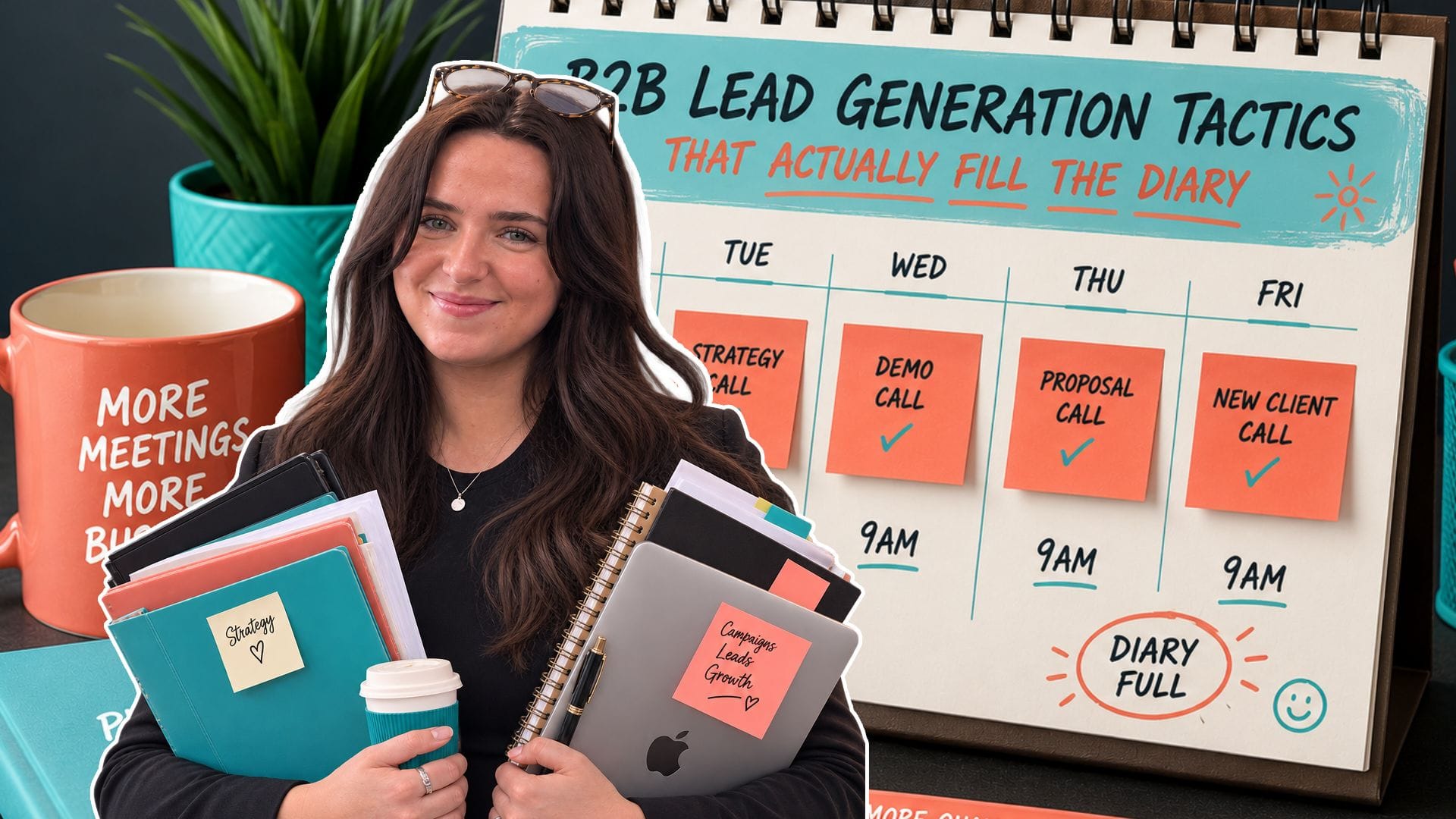

B2B lead generation works when the buyer already finds you credible before you speak. Gartner surveyed 632 B2B buyers and found 61% prefer a buying experience with no sales rep in it at all.
Two further findings explain why more outreach makes the problem worse. Gartner found 73% of buyers actively avoid suppliers who send irrelevant outreach. A further 69% report that a supplier’s website and its salespeople tell them different things.
If your pipeline is full and your diary is empty, one of those numbers is usually the reason.
Why Most B2B Lead Generation Strategies Stall
The common failure is treating lead generation as a volume game. More emails, more ads, more noise. The result is a list of contacts who never asked to be contacted and a sales team chasing them anyway.
Gartner’s Robert Blaisdell puts the cost plainly. Bad prospecting, he says, ‘actively damages relationships with potential customers’.
The shift that matters runs from quantity to quality. It starts with accepting that most of the buying decision happens in rooms you are not in.
You might argue that outreach still books meetings. It does. The question is what that outreach lands on.
A prospect who has read your take on their industry in a publication they respect answers a cold approach from a completely different starting point.
The Awareness Gap That Costs You Deals
Most B2B brands fund the bottom of the funnel, retargeting warm leads and improving conversion pages, while leaving the top to chance. That gap leaves you competing for the same small pool of in-market buyers as everybody else.
Brands that invest in broad awareness through press coverage, thought leadership and social content arrive in more buying conversations. They were in more minds before the process started.
In our experience the person who kills a deal is rarely the one who took your call. It is the colleague who searched you afterwards and found nothing.
A B2B decision rarely sits with one person. The material that persuades the rest of the room is the material you published months before anyone asked.
B2B Lead Generation Tactics That Earn the Meeting
Thought Leadership That Earns Search and AI Visibility
Publishing content settles nothing on its own. The questions worth asking are whether it ranks, whether AI tools cite it and whether it answers what your buyers actually search.
Generative engine optimisation is reshaping how B2B brands get found. The businesses building authority through useful, specific content are the ones surfacing in AI Overviews and featured snippets.
The tactical implication is plain. Write for one reader with one problem, answer it directly and build depth across a cluster of related pieces rather than scattering single posts. What GEO is covers the underlying mechanics.
PR as a Lead Generation Channel
Earned media does three commercial jobs at once. It reaches new audiences, it validates your credibility to prospects already circling and it gives your sales team something concrete to send.
Modern PR strategies moved past the press release years ago. The strongest campaigns tie media relations to content and social amplification. One piece of coverage then produces touchpoints across several channels.
That is also where the Gartner consistency problem gets solved. Coverage, website and seller all saying the same thing is what removes the doubt.
Social Proof That Survives a Buying Committee
Social proof works differently in B2B and it works just as hard. Case studies, client testimonials and independently verified results lower the perceived risk of choosing you.
User-generated content in B2B looks like client testimonials on LinkedIn, partner co-created content or peers referencing your work in public. The principle matches consumer marketing, because people trust other people ahead of brands.
LinkedIn remains the most direct route to decision-makers, though organic reach has tightened. The accounts cutting through post a clear point of view, show real work and reply to people.
Short-form video belongs in that mix. In our experience a sixty-second video explaining a problem you solve regularly beats a polished corporate explainer, because the specificity signals expertise that production value cannot fake.
Email That Starts Conversations
Email earns its place when the sequence opens a conversation rather than pushing a conversion. The approaches that work are short, specific and written as one person to another.
They reference something relevant, give a clear reason for making contact and make the next step obvious without pressure. A nurture sequence connected to useful content keeps you present across long buying cycles. Getting started with email marketing properly matters more than scaling it fast.
How to Know If Your Lead Generation Is Working
Lead volume tells you very little. The measures that matter are how many qualified conversations those leads produce and how many of those conversations convert.
High volume with low conversion usually means a targeting problem or a weak initial offer. Low volume usually means a reach and awareness problem.
Connecting PR, content and social activity to commercial outcomes is a discipline in itself. Measuring the impact of your marketing needs clear attribution and an honest definition of what qualified actually means in your business.
Frequently Asked Questions
What is the most effective B2B lead generation tactic?
No single tactic wins for everyone, because the answer depends on your sector, your sales cycle and where your buyers spend time. In our experience thought leadership, earned PR coverage and targeted LinkedIn activity together outperform paid-only approaches for most B2B brands.
How long does B2B lead generation take to produce results?
Paid channels can produce enquiries within days. In our experience organic content, PR and search need three to six months before momentum shows. We advise running both, using paid activity for near-term leads while earned and organic channels compound.
What is the difference between a lead and a qualified lead in B2B?
A lead is any contact showing interest. A qualified lead has a real need, the authority to make or influence the decision and a realistic timeframe to buy.
Does PR actually generate B2B leads?
Yes, though rarely in a straight line. PR builds the credibility that makes every other tactic work harder. Given that 61% of buyers prefer to avoid sales reps entirely, the material they find without you does the selling.
B2B lead generation is a system rather than a campaign. PR builds credibility, content earns visibility, social reaches decision-makers and email closes the distance. Your buyer checks all four before speaking to anyone.
We build those four to say the same thing, which is what turns a pipeline into a diary.
Book a B2B Pipeline Review and we will audit what your buyers find when they check you.