
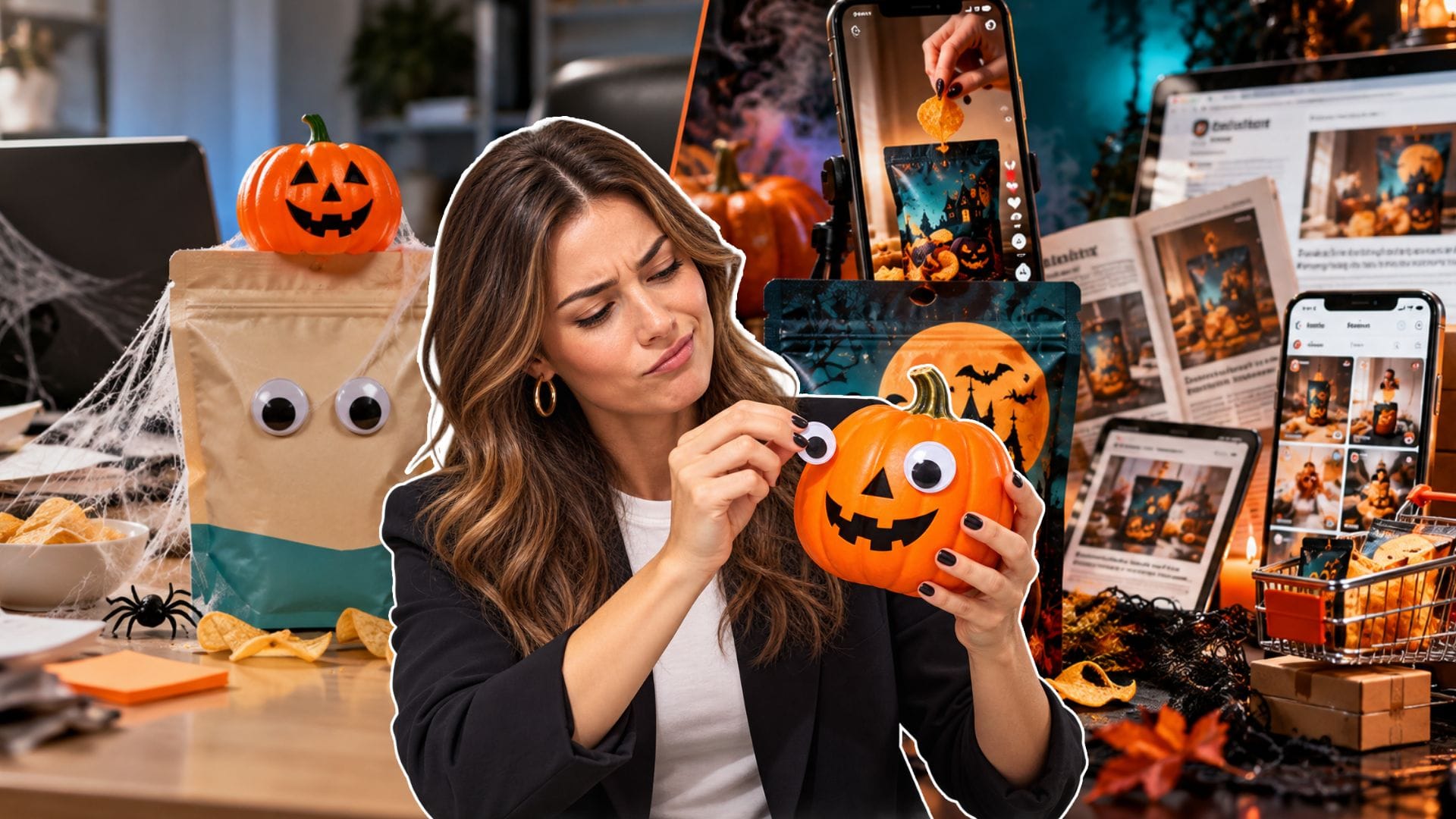

Halloween marketing works when a brand plans a creative idea, a channel mix and a PR hook weeks before October starts. Most brands do the opposite. They add a pumpkin to the packaging, write a pun-heavy caption in the final week and call it a campaign.
The prize is real but tighter than it looks. GlobalData forecast UK Halloween spending of £537m for 2025, up 3.2%, with much of that growth coming from higher prices rather than more demand. The same research found 60% of Halloween shoppers planned to cut back, which means cautious buyers reward brands with a reason to choose them.
If you run marketing for an FMCG, D2C or consumer brand and October is close, this guide separates what you can still do this year from what to plan for next.
Why Most Halloween Marketing Campaigns Fall Flat
Seasonal moments invite low-effort thinking. A countdown clock and an orange colour palette do not make a strategy. Followers can tell a brand that thought about the moment from one that reacted to it.
Timing is the first failure. In our experience, consumer interest builds through October. A campaign that lands on the 28th arrives after many buyers have decided.
The second failure is treating Halloween as a visual exercise instead of a story. A strong campaign connects the occasion to what the brand stands for, which is why storytelling in PR earns its place in the commercial plan.
Is Halloween Worth the Budget When Shoppers Are Cutting Back?
With most shoppers planning to spend less, some brands will sit Halloween out, which in our view is the wrong call. Cautious shoppers still buy small treats. GlobalData’s Eleanor Simpson-Gould advised retailers to ‘promote low-cost Halloween items such as themed candles, drinks and snacks to encourage small impulse purchases’.
A squeezed market punishes generic activity and rewards brands with a clear idea at an accessible price. That makes the creative idea matter more in a tight year.
Start With the Creative Idea, Not the Calendar
The calendar tells you when to publish. The creative idea tells you what to say. Build a territory that fits your brand, suits the occasion and interests your audience before anyone writes a brief.
For a food brand, that might be a limited-edition flavour with a story behind it. For a D2C brand, it might be a costume or recipe challenge that gets customers creating on your behalf. For a B2B brand, it might be a light-hearted piece of research that gives trade press a seasonal angle.
Halloween suits scaled UGC marketing because the occasion already prompts people to share costumes, recipes and decorated homes. Give them a reason to tag you and you earn reach that paid media struggles to buy, a theme we explore in the power of UGC in building brand trust.
Choose Channels Based on What the Idea Demands
Not every idea works on every platform. Short-form video on TikTok and Instagram Reels suits high-energy, participatory formats. Instagram now rewards content people send to friends, as we cover in our guide to the Instagram algorithm update on sends.
For Halloween, that means making something people want to forward, such as a costume idea for a friend or a recipe for the weekend party. A post that earns a send reaches further than one that collects a passing like.
PR sits alongside social. A seasonal product launch, a Halloween event or a surprising piece of consumer research can earn national and trade coverage. Modern PR strategies treat that coverage as fuel for owned and paid content, which makes every placement work twice.
Get Your Timing Right
Aim to be visible from the first week of October. That gives you three to four weeks to move from awareness to engagement to conversion, a phased build that in our experience outperforms one late burst. Book press activity earlier still, since journalists plan seasonal features ahead of the date.
Halloween Marketing for FMCG and D2C Brands
FMCG brands selling through supermarkets face a hard deadline. In our experience, grocery buyers agree seasonal ranges long before October. An FMCG brand reading this in autumn is really planning next year’s range.
This year, focus social, PR and in-store activation on products already listed and align every post with shelf availability, as our guide to social media marketing in the FMCG industry explains.
D2C brands have more control and more responsibility. With no retailer driving footfall, the whole journey from discovery to purchase runs through your own channels. Maximising your content in D2C marketing during a seasonal peak means planning every touchpoint from the first Reel to the order confirmation email.
What a Seasonal Campaign Can Deliver
Seasonal moments reward brands that plan early and commit fully. For Doisy & Dam’s Easter launch, we timed the Really Good Egg to World Wildlife Day, sent eggs to more than 100 influencers ahead of launch and hosted a press and buyer event. The product sold out in stores and on Amazon and ranked as the 14th highest selling chocolate brand on Amazon that Easter.
The same principles apply at Halloween: one clear idea, early seeding and PR working alongside social.
What Makes Halloween Content Shareable
Shareable content makes people feel something: amusement, surprise or the sense that a post describes them exactly. Halloween content that earns shares tends to be funny, unexpectedly beautiful or useful, such as recipes, costume guides and product pairings.
Short-form video rewards brands that commit to an idea. A half-hearted Reel with a stock sound disappears before the next video loads, while a bold creative point of view gives people a reason to watch and send.
Frequently Asked Questions
When should brands start their Halloween marketing campaigns?
Plan in late summer and go live with consumer-facing content in the first week of October. FMCG brands that need new products on shelf should plan their range the year before.
What Halloween marketing content performs best on social media?
Short-form video built to be shared. Recipes, costume ideas and humour give people a reason to send a post to a friend, which Instagram now rewards with extra reach.
Is Halloween marketing relevant for B2B brands?
Yes, with a lighter touch. A seasonal angle on your own research or a playful piece of thought leadership gives trade press a reason to cover you and shows personality in a dry category.
How do you measure whether a Halloween campaign has worked?
Track sends and shares, traffic from social, sales or enquiries during the campaign window and the volume and quality of earned coverage. Compare each figure with the same weeks last year to separate the campaign effect from the seasonal lift.
Plan Your Halloween Marketing Before the Pumpkins Arrive
Halloween marketing converts when the idea comes first, the timing starts early and PR and social pull in the same direction. Book a seasonal campaign planning session with Nifty and we will map one creative idea across social, UGC and PR for your next seasonal moment.